

Is visiting museums an experience that is accessible to everyone? How can people with different types of disabilities explore and discover cultural heritage? Answers to these questions were sought during an Accessibility Days event, organised as a special educational trip along the museum route in Kurzeme developed within the #AccessRoute project.
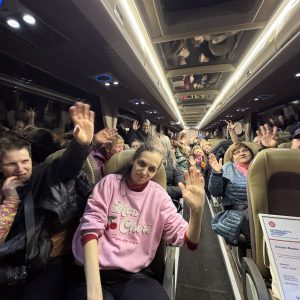
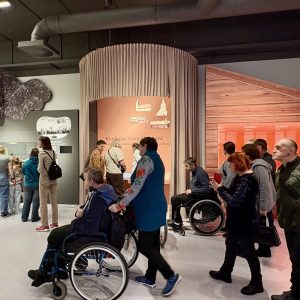
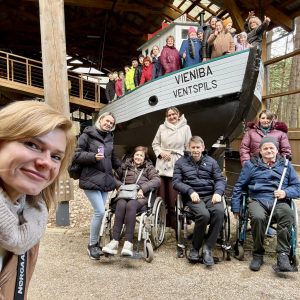
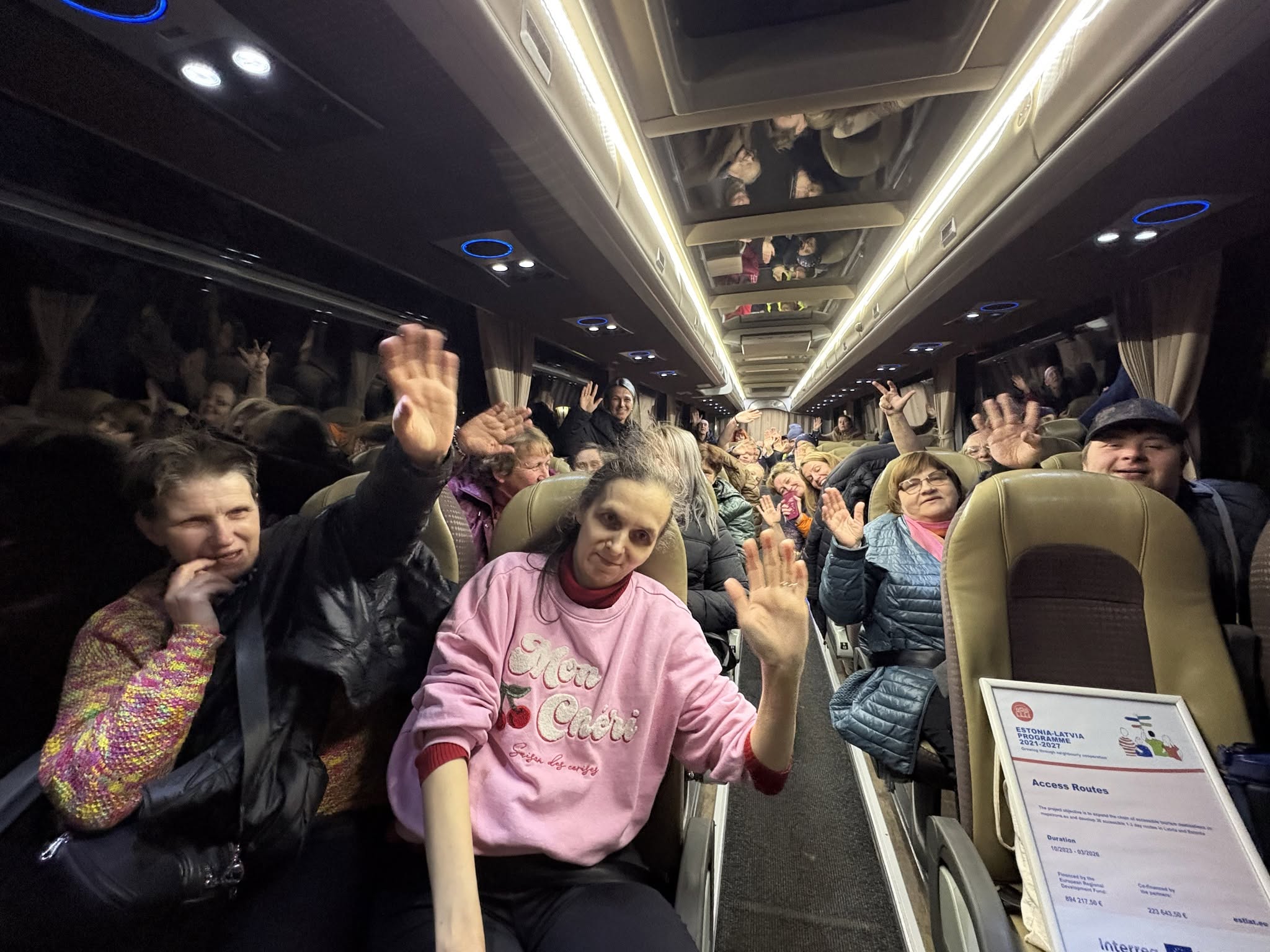
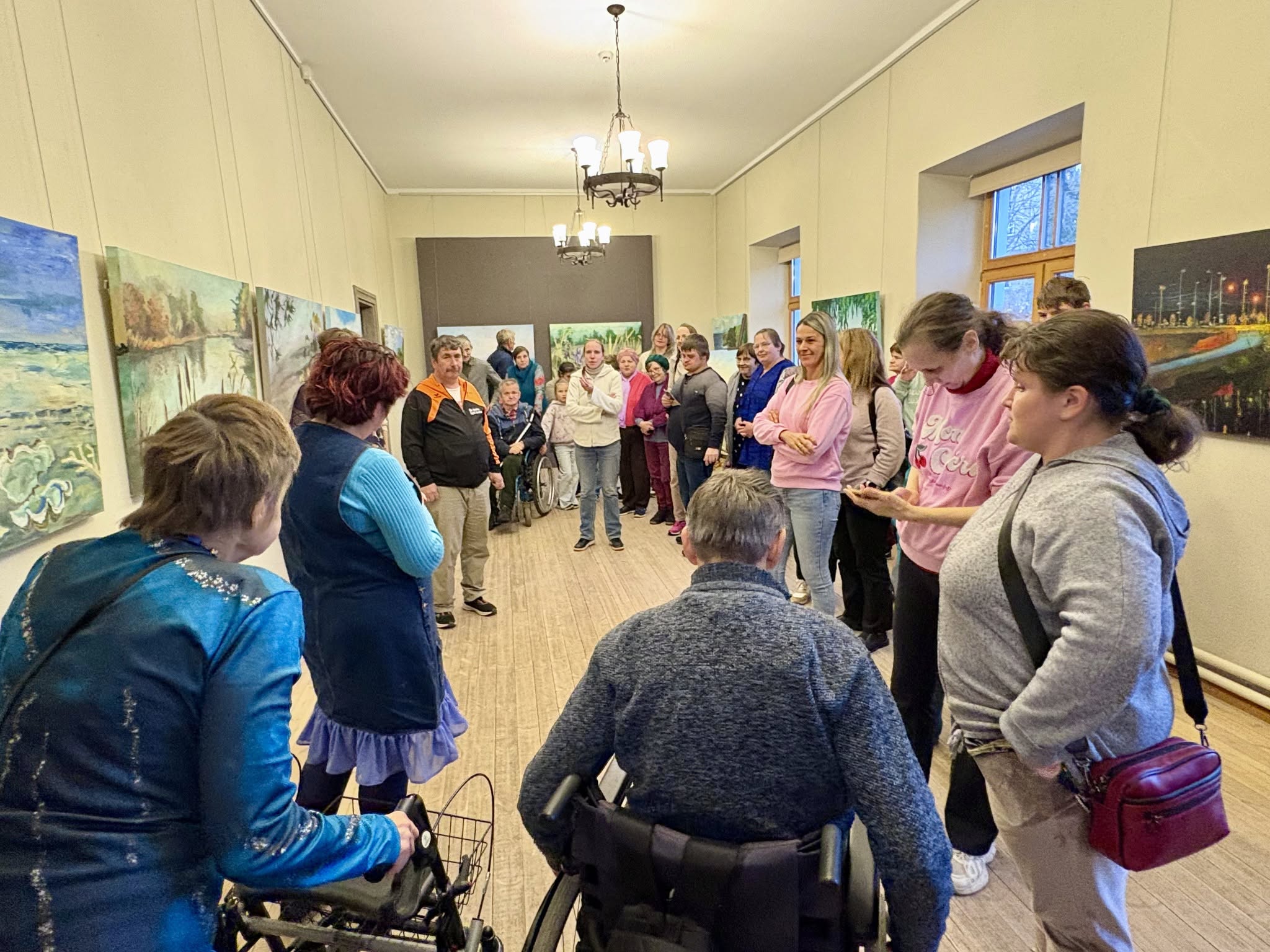
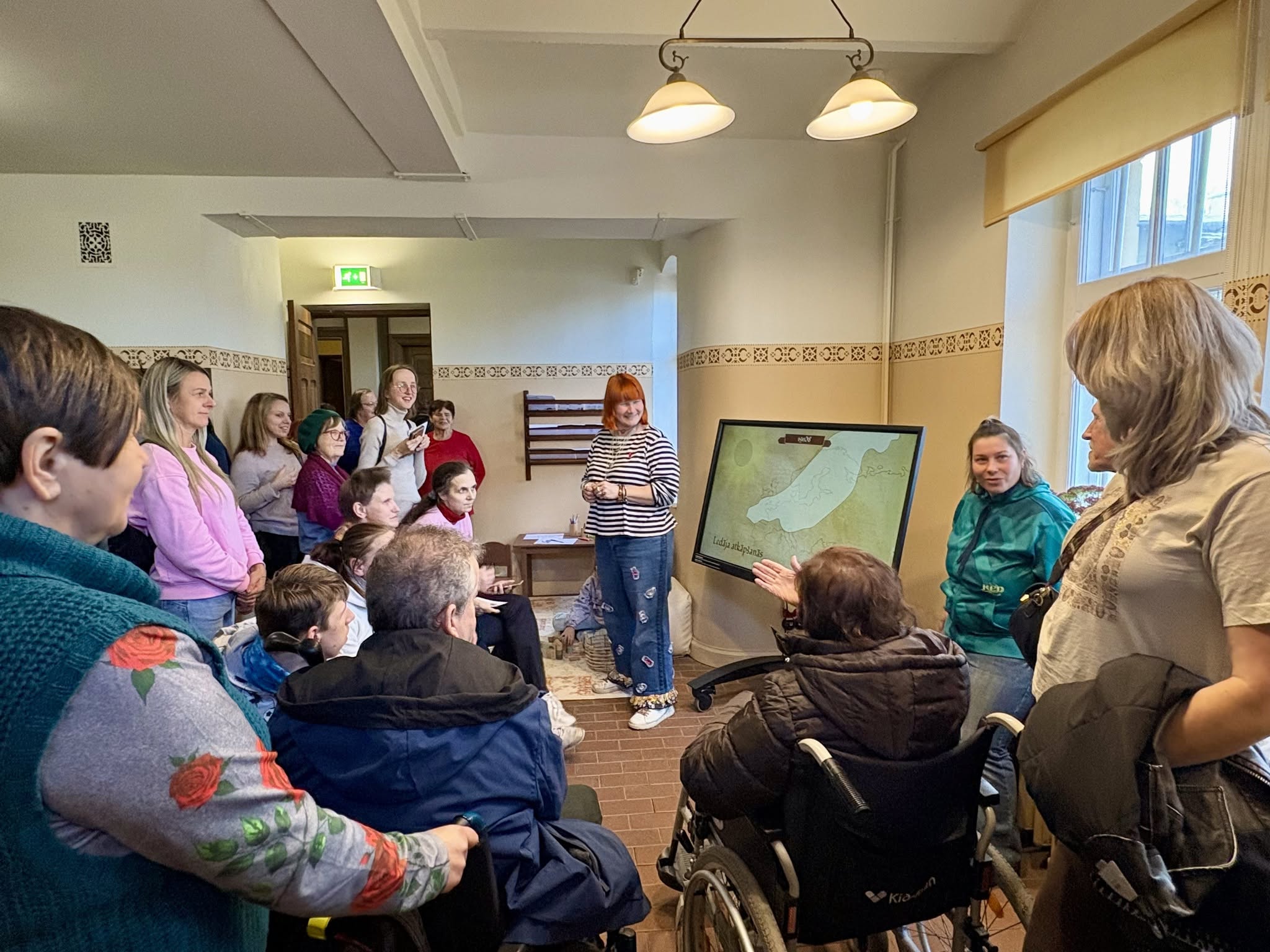
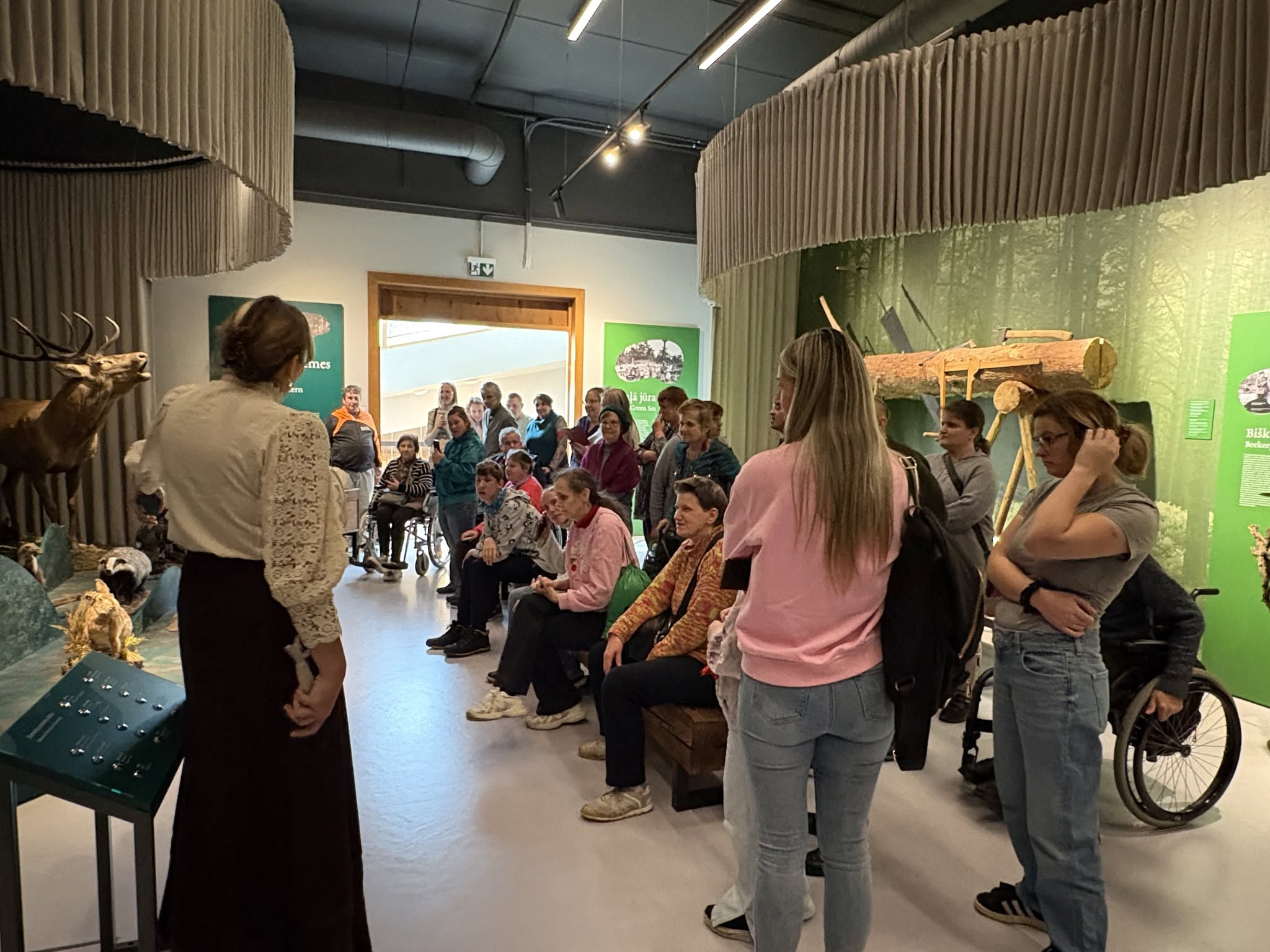
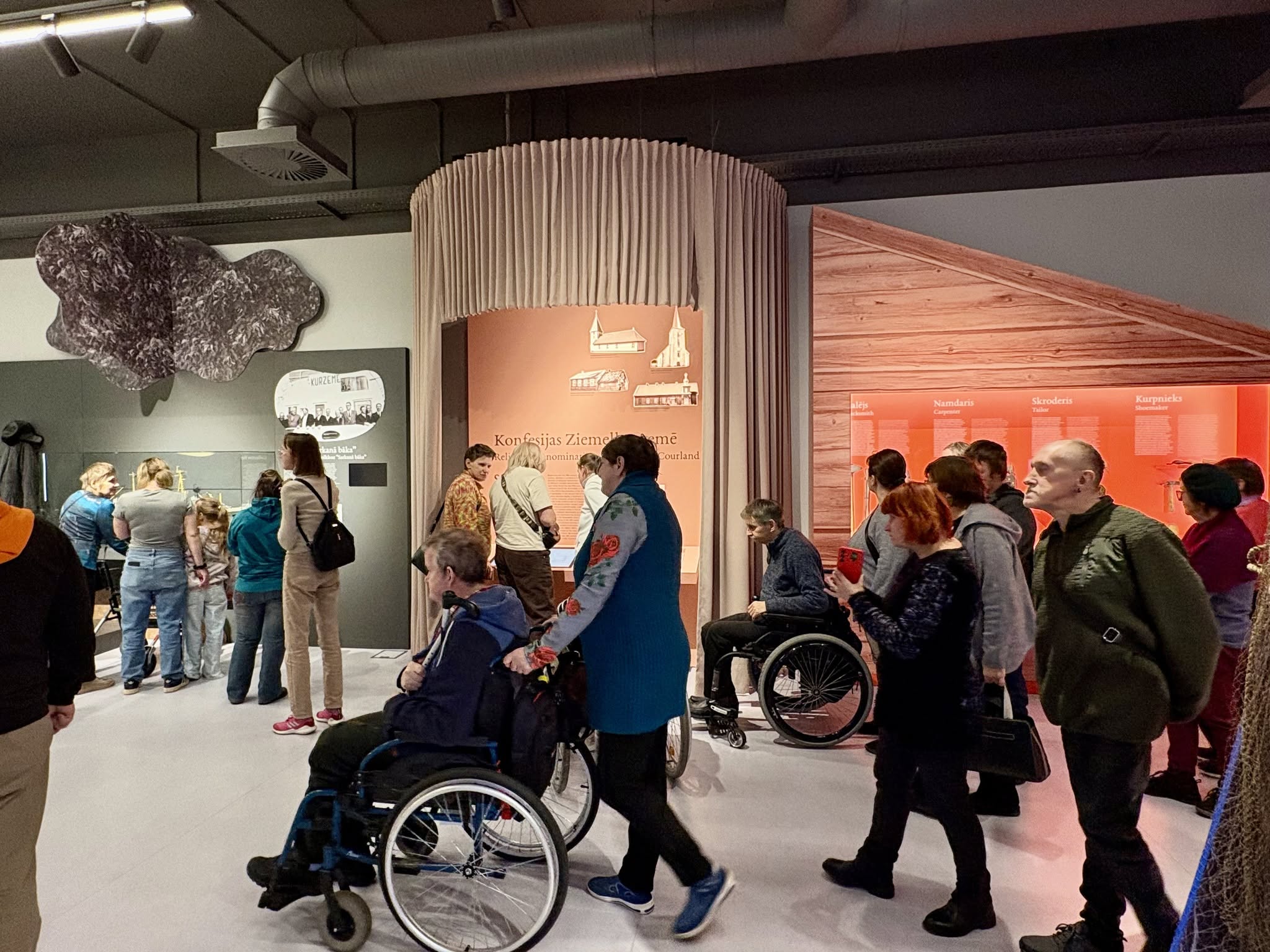
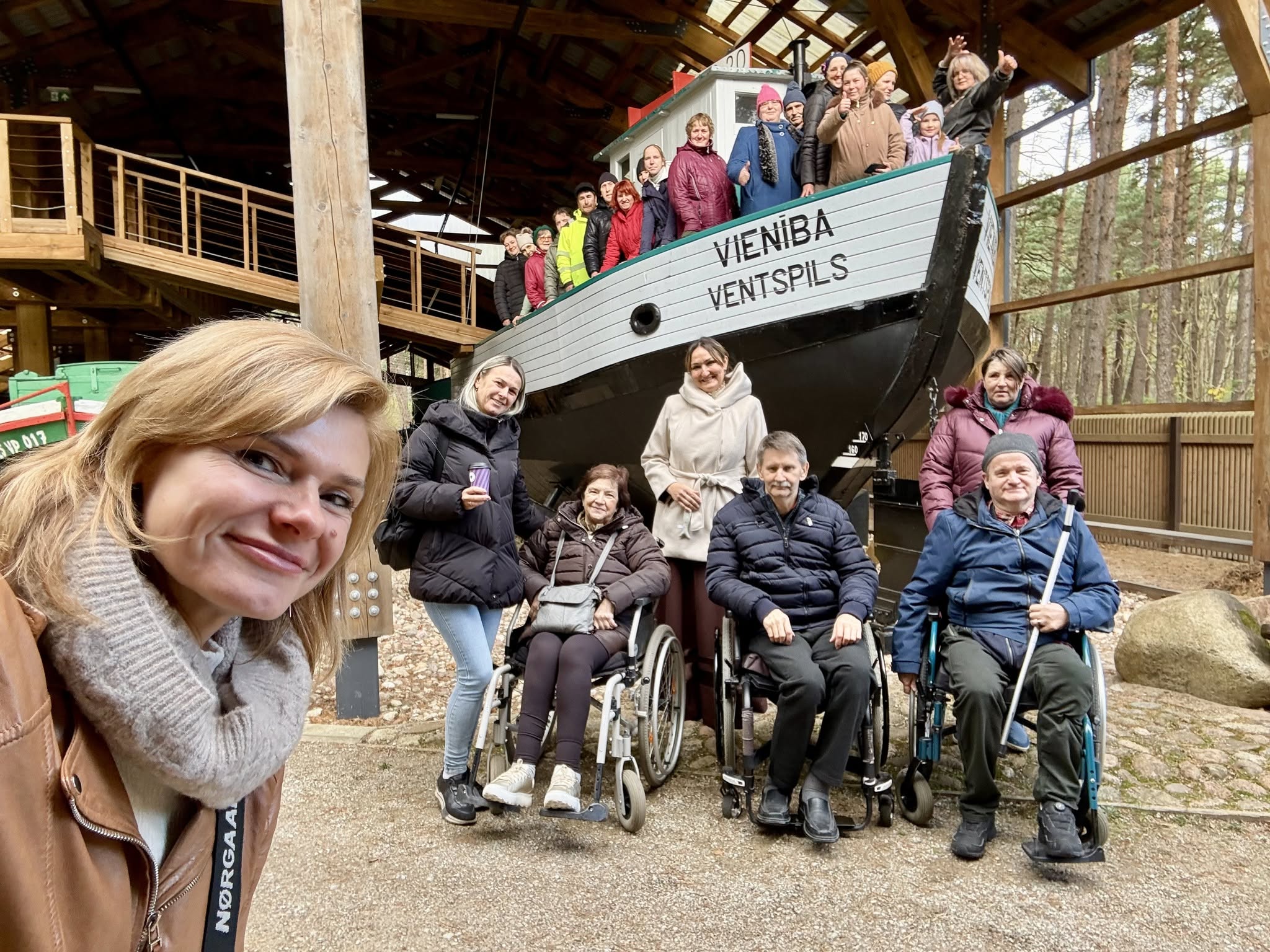
More than 30 participants took part in the trip – people with different types of disabilities who had the opportunity to experience the museums’ accessibility solutions first-hand, assess the facilities available to visitors and explore different ways of discovering cultural heritage.
Accessibility Experiences at Four Stops
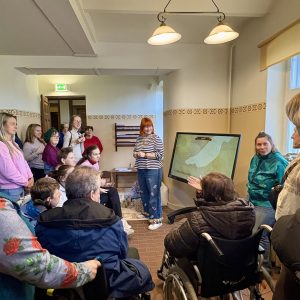
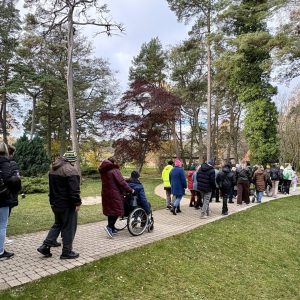
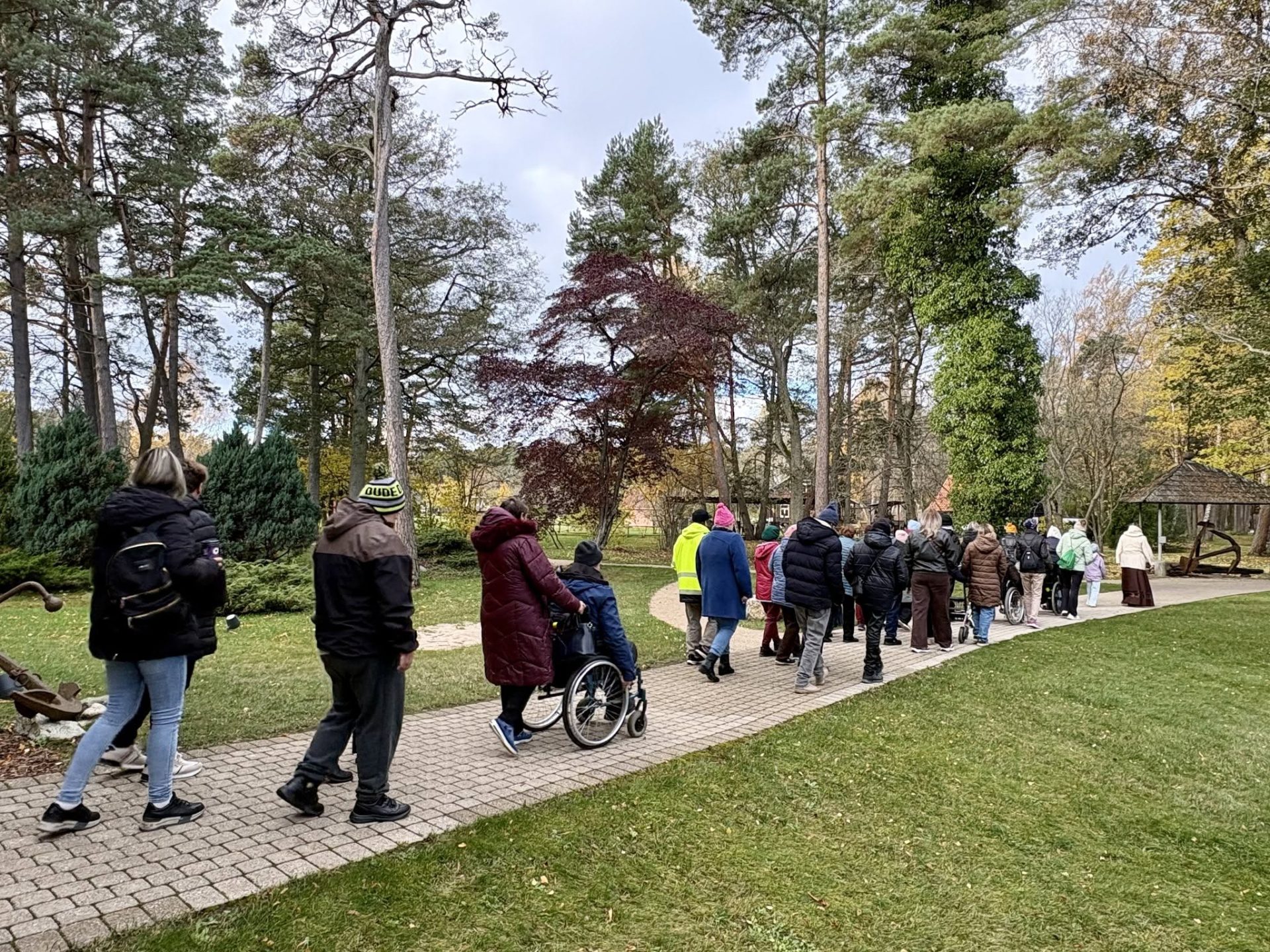
Ventspils Seaside Open-Air Museum offers visitors spacious premises, new exhibitions, accessible toilet facilities and opportunities to enjoy walks outdoors. The museum grounds and its offerings allow visitors to explore cultural heritage in a variety of ways and at their own pace.
Read more about the museum’s accessibility and its “Travelling Museum” box here: Ventspils Seaside Open-Air Museum – Mapeirons.
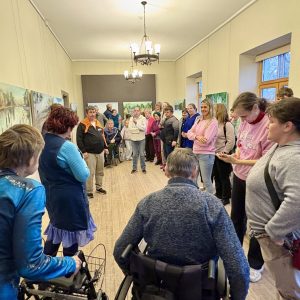
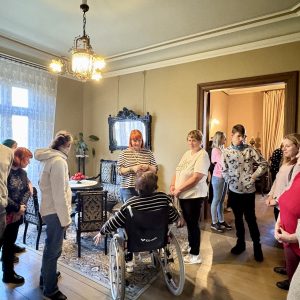
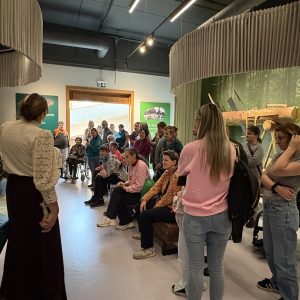
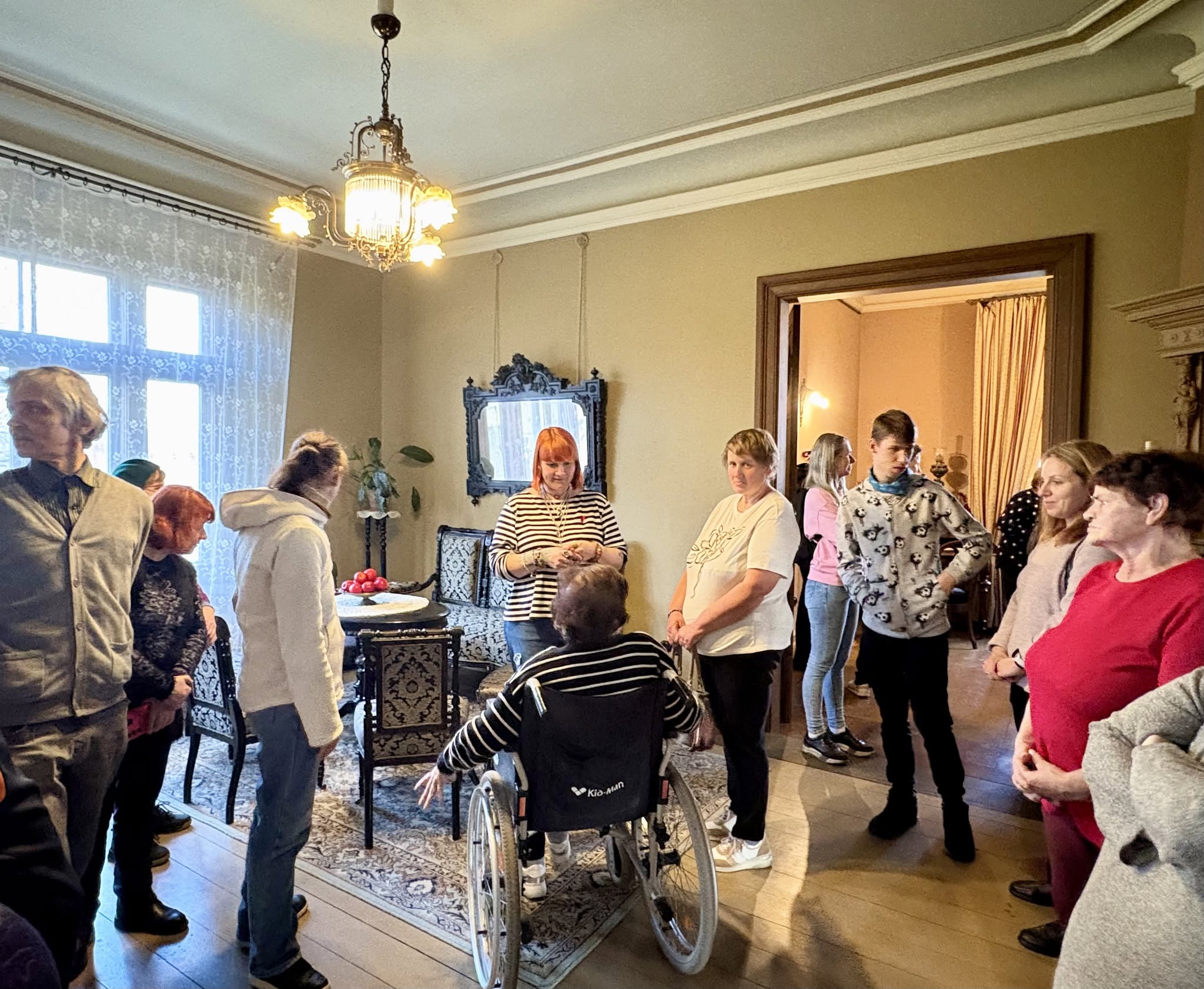
Kuldīga District Museum, also known as Bangert’s Villa, demonstrates that historic buildings can also become more accessible to different groups of visitors. Visitors with disabilities can drive right up to the villa’s entrance, while an installed platform lift provides access to the building, making it possible for wheelchair users to visit the museum as well.
Read more about the museum’s accessibility and its “Travelling Museum” box here: Kuldīga District Museum – Mapeirons.
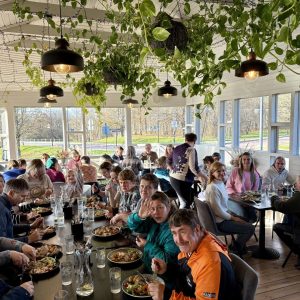
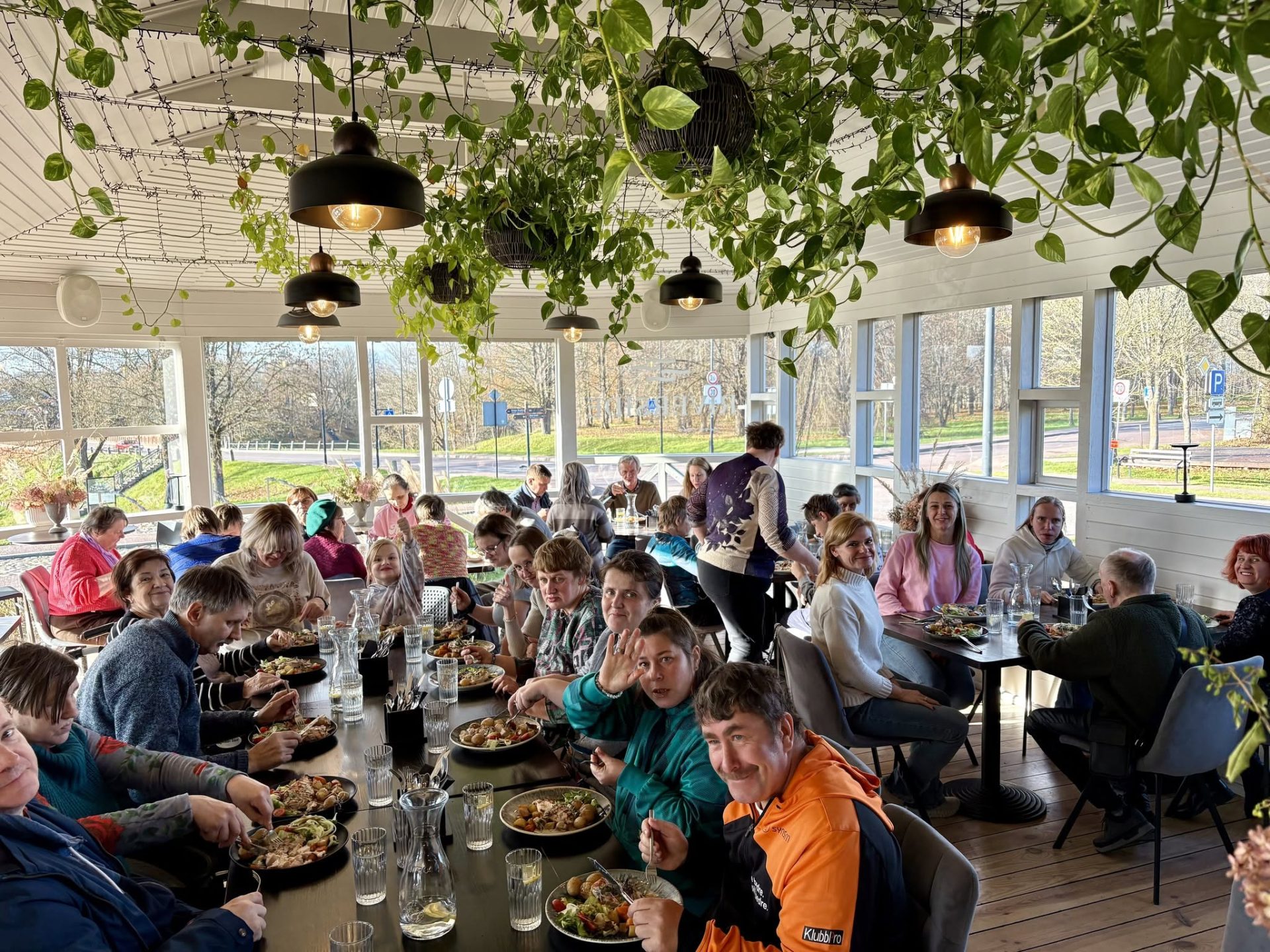
Riverside Café in Kuldīga, located right next to the Venta Rapid, was chosen for the lunch break. The café can be accessed via a wooden ramp, and visitors can enjoy a meal in its spacious dining area. Accessible toilet facilities are also available.
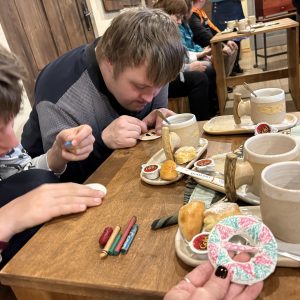
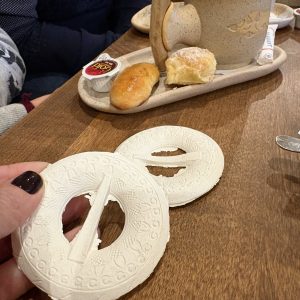
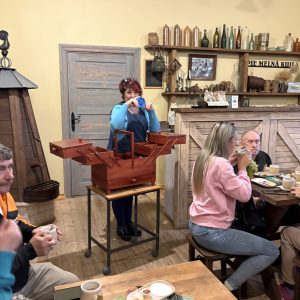
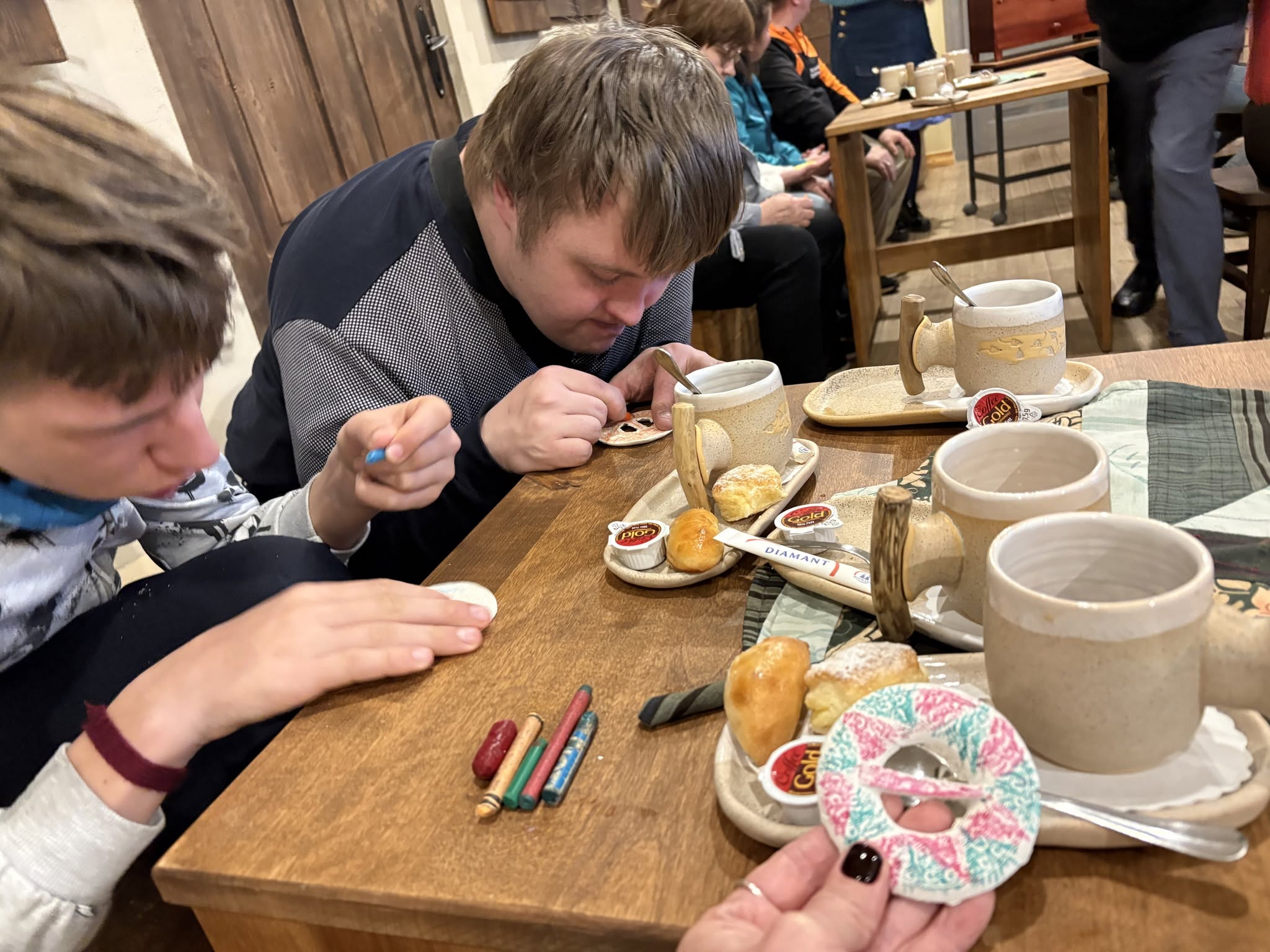
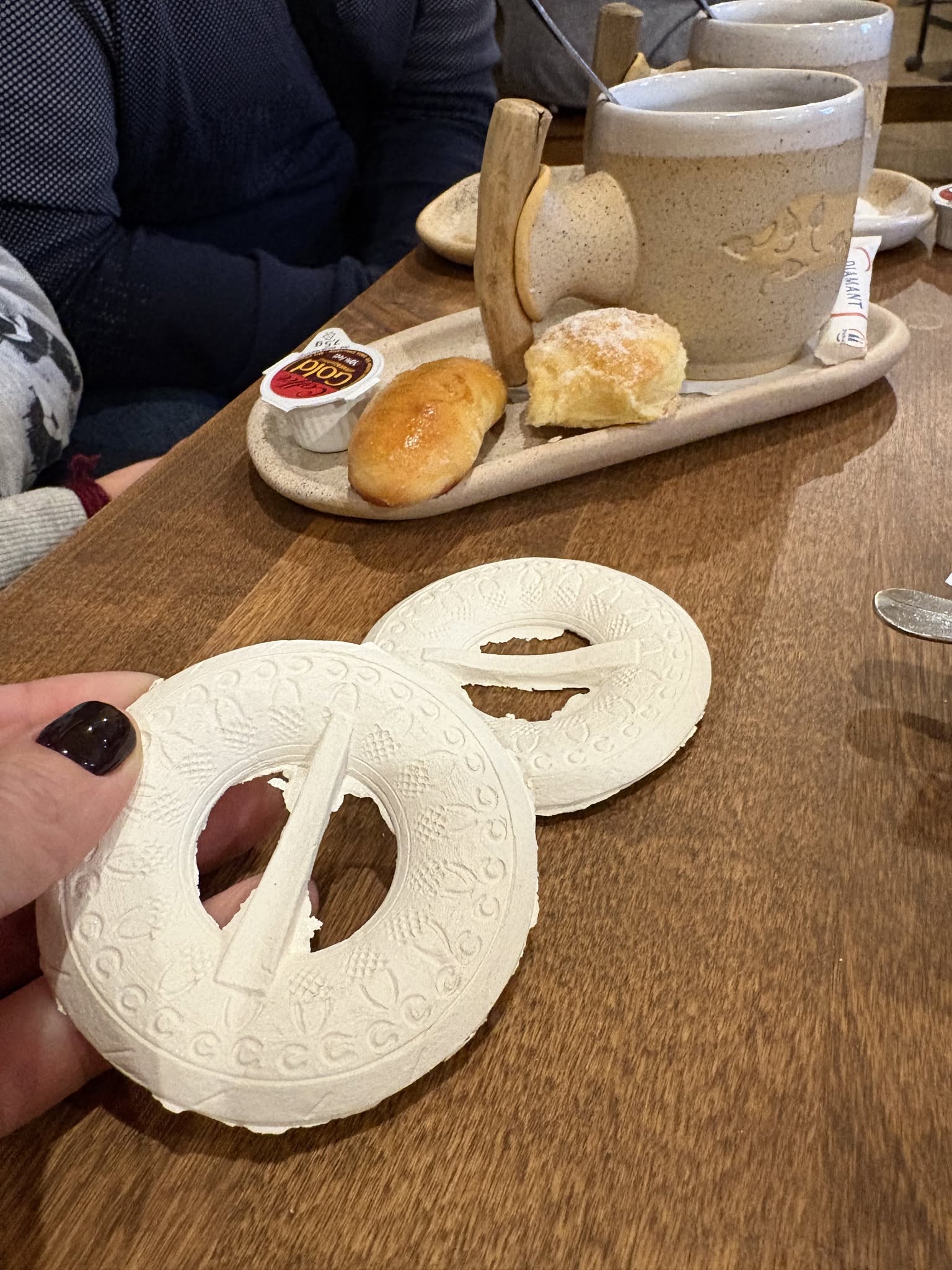
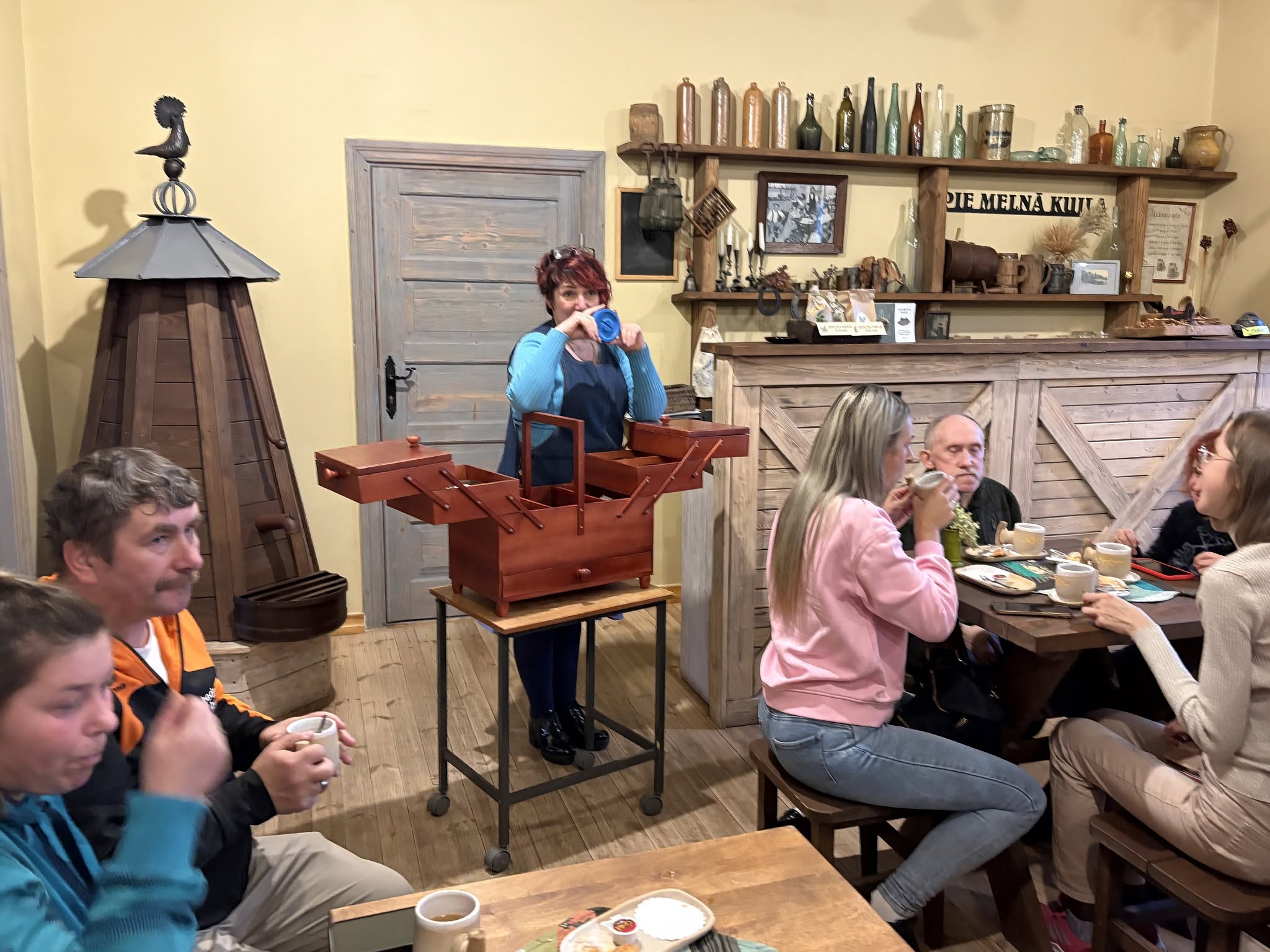
Kandava Local History Museum offers improved access via a newly constructed pathway and a special, engaging experience. Museum visitors had the opportunity to learn about the process of making acorn coffee, taste this unusual drink and even make their own traditional Latvian brooch. It is an opportunity not only to discover something new but also to take an active part and try out different skills.
“Travelling Museum” Boxes – Museum Stories Through All the Senses
Special attention during the trip was also given to the “Travelling Museum” boxes, which are available at all three museums visited along the route: Ventspils Seaside Open-Air Museum, Kuldīga District Museum and Kandava Local History Museum.
In total, these boxes are available at six museums in Kurzeme:
Ventspils Seaside Open-Air Museum (Ventspils);
Kuldīga District Museum (Kuldīga);
Kandava Local History Museum (Kandava);
Roja Marine and Fishing Museum (Roja);
Talsi Regional History Museum (Talsi);
Durbe Castle (Tukums Municipality).
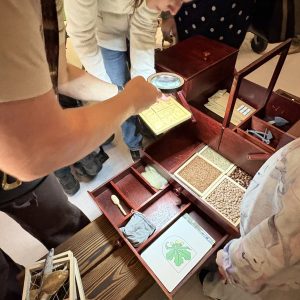
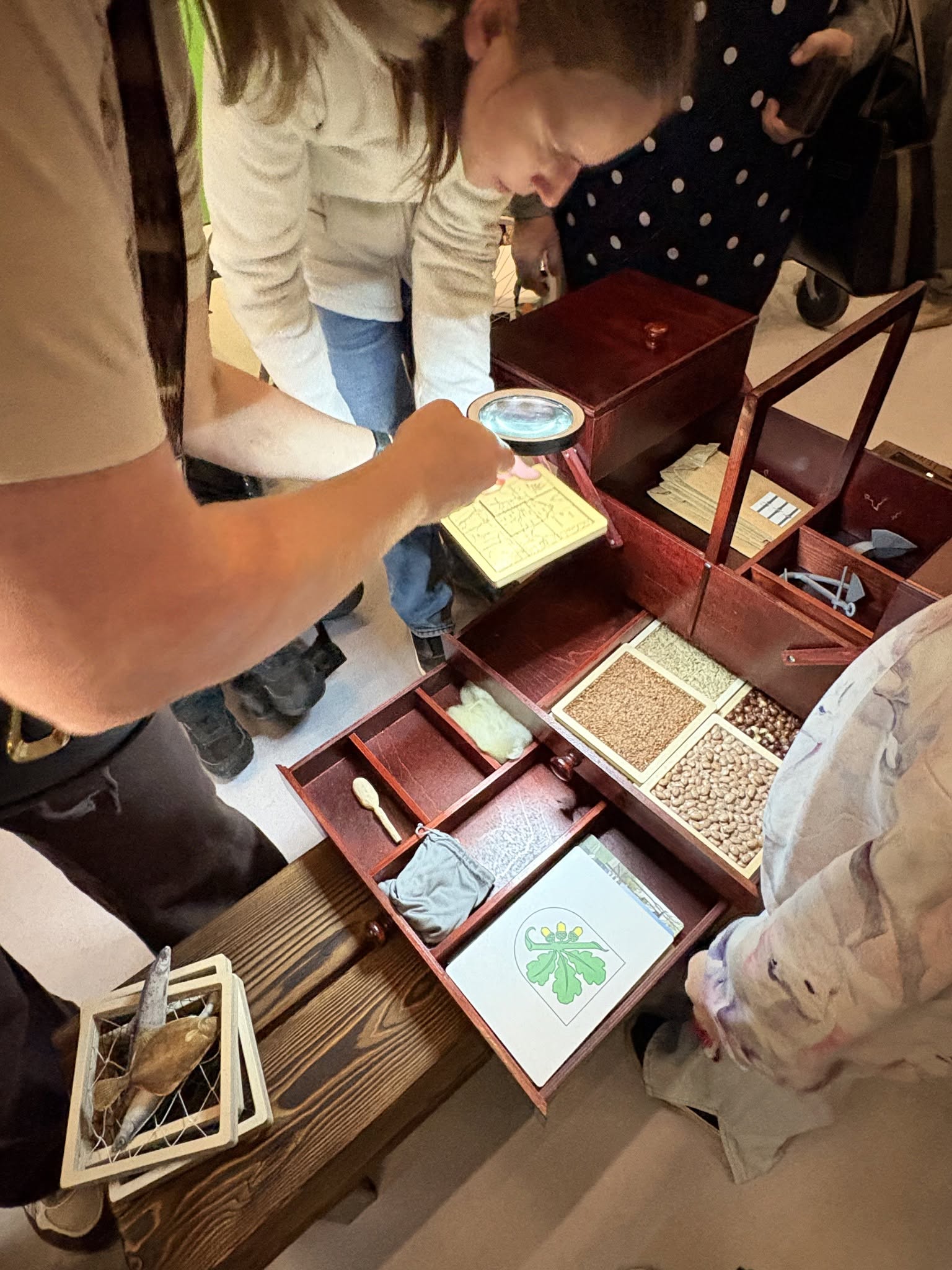
The “Travelling Museum” boxes are specially designed tools for museum content interpretation and accessibility. They allow visitors to explore exhibition stories not only through sight but also through touch, hearing and taste. The boxes were developed as part of cross-border accessible tourism projects to make cultural heritage more accessible to everyone, including people with visual, hearing and cognitive impairments.
The boxes contain a variety of tactile objects, miniature replicas of exhibits, reproductions of historical artefacts and other educational materials. Museum stories are complemented by audio descriptions and visual interpretations of animated sounds. The boxes themselves have also been carefully designed: they are made of wood, equipped with sturdy handles and feature tactile inscriptions in Latvian, Estonian and English.
The contents combine educational materials shared by several museums with objects specifically adapted to the exhibitions of each individual museum. This means that every box offers its own unique way of discovering the museum’s collections and stories.
Such solutions help broaden the range of museum visitors and provide an opportunity to experience cultural heritage in more diverse, engaging and accessible ways.
Accessibility Begins with the Opportunity to Experience!
The trip demonstrated how important it is not only to create a physically accessible environment but also to consider how every visitor can participate, explore and experience culture. Ramps, platform lifts, accessible toilet facilities and multisensory exhibitions are important steps towards a more inclusive cultural environment.
Heartfelt thanks go to all the clients and staff of Tukums Municipality Social Service who took part in the trip, as well as to the museum guides – Dace Kamela, Baiba Vētrāja and Kitija Švīgере!
The trip was organised with the support of the Estonia–Latvia Programme within the #AccessRoute project.
13 Photos
Close
Other news
All news
Mapeirons
Science Route in Kurzeme and Vidzeme
27. July 2026
Can science be accessible? Our A-team – Daira, Reinis, Ritvars and Voldemārs decided to explore this, and together with video operator Dima, went to Ventspils…
Nature trails
Hiking wheelchairs available free of charge in Ādaži Municipality for people with mobility impairments
23. March 2026
At the Carnikava Local History Centre in Ādaži Municipality (7 Jomas Street), special equipment is available for short-term use – a hiking wheelchair and a…
Mapeirons
The Sensory Path at the “Balttour” Exhibition: What Tourism Looks Like When Experienced Differently
9. February 2026
From 6 to 8 February 2026, at the tourism exhibition–fair “Balttour”, visitors had the opportunity not only to discover new destinations, but also to experience…